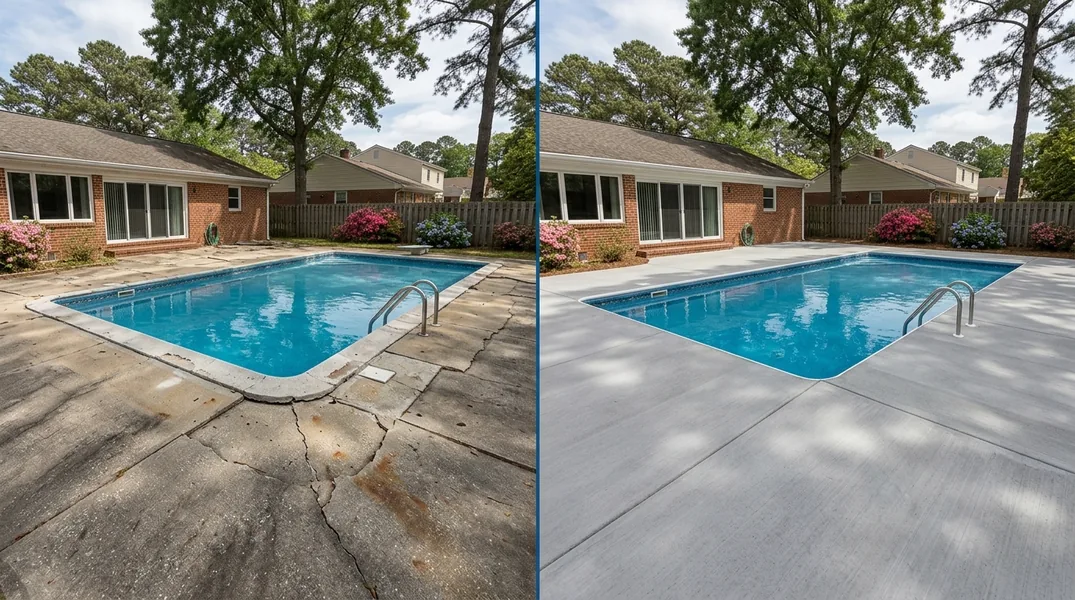
Concrete vs. Pavers: The Core Differences
When planning a new driveway or patio in Virginia Beach, one of the most important decisions you'll make is choosing between concrete and pavers. Both materials have earned their place in Hampton Roads landscaping, but they offer distinctly different benefits and drawbacks. Understanding these differences is the first step toward selecting the right surface for your home.
Concrete is a monolithic material poured as a single slab, while pavers are individual units (typically stone, brick, or permeable concrete) laid out in a pattern. This fundamental difference influences everything from installation time to long-term maintenance. Concrete offers a clean, modern aesthetic and faster installation, whereas pavers provide design flexibility and easier repair of damaged sections. For homeowners in Virginia Beach who value customization and a classic look, pavers often win. For those seeking durability and simplicity, concrete typically takes the lead.
Durability and Lifespan: What to Expect
Both concrete and pavers are built to last, but they age differently. Concrete Driveways typically last 25 to 40 years with proper care, depending on climate and usage. The Hampton Roads region's humid subtropical climate, with its freeze-thaw cycles in winter and intense summer heat, can accelerate concrete deterioration if the material isn't properly sealed and maintained. Concrete is prone to cracking over time, especially in areas with significant temperature fluctuations or heavy vehicle traffic.
Pavers, on the other hand, can last 25 to 50 years or even longer. The advantage of pavers is that individual units can be replaced without affecting the entire surface, whereas a significant crack in concrete often requires costly repairs or complete resurfacing. However, pavers require more frequent maintenance to keep them level and prevent weeds from growing between the joints. The sand or polymeric material used to fill paver joints can shift and settle, particularly in areas with poor drainage or heavy use.
Maintenance Requirements for Hampton Roads Properties
Concrete requires regular sealing to protect against moisture, salt spray (especially near coastal areas), and UV damage. In Virginia Beach, where proximity to the ocean means salt-laden air, this maintenance becomes even more critical. Homeowners should plan to reseal concrete every two to three years and address any cracks promptly with Concrete Repair and Resurfacing services before they worsen. Routine cleaning with a pressure washer keeps concrete looking fresh, though excessive pressure can damage the surface.
Pavers demand more hands-on upkeep. Weeds and moss thrive between paver joints, especially in humid climates, requiring regular weeding and occasional power washing. The polymeric sand used in modern paver installations helps reduce weed growth compared to traditional sand, but it still requires attention. Over time, pavers may shift slightly, requiring releveling to maintain a smooth, safe surface. For homeowners willing to invest the time, this level of maintenance can be rewarding; for those seeking a low-maintenance solution, concrete may be the better choice.
Design Flexibility and Aesthetic Appeal
If customization is a priority, pavers offer unmatched design possibilities. They come in countless colors, textures, sizes, and patterns, allowing you to create a unique look that complements your home's architecture. Whether you prefer the rustic charm of clay brick, the elegance of natural stone, or the modern appeal of permeable pavers, there's a paver option to match your vision. Pavers also work beautifully for Concrete Patios and outdoor entertaining spaces, where visual impact matters.
Concrete, while less visually varied in its basic form, has evolved significantly. Stamped and Decorative Concrete options allow homeowners to mimic the appearance of stone, slate, or brick while maintaining concrete's durability and ease of maintenance. Stains and dyes can be applied to create rich, lasting colors. For many homeowners, the sleek, contemporary look of polished or decoratively finished concrete is exactly what they're seeking. The choice between the two often comes down to personal style and whether you prefer the individuality of pavers or the clean simplicity of concrete.
Concrete Driveways Cost in Virginia Beach: What to Budget
When comparing concrete vs. pavers, cost is always a significant factor. Concrete typically has a lower upfront installation cost, generally ranging from $8 to $15 per square foot for a standard driveway, though pricing varies based on site conditions, thickness, and finishing options. Decorative or stamped concrete costs more, often between $12 and $25 per square foot. For a 500-square-foot driveway, you might expect to pay $4,000 to $7,500 for basic concrete installation.
Pavers generally cost more upfront, ranging from $15 to $30 per square foot depending on the material quality and complexity of the pattern. That same 500-square-foot driveway could cost $7,500 to $15,000 or more with pavers. However, the lower maintenance and longer lifespan of pavers can offset the higher initial investment over time. Additionally, because individual pavers can be replaced, you won't face the full replacement cost that a significantly damaged concrete driveway might require. Virginia Beach Concrete recommends getting a free estimate for both options so you can compare total cost of ownership, not just installation price.
Climate Considerations for Hampton Roads
Hampton Roads experiences a unique climate that influences which surface performs better. The region's humid summers, mild winters with occasional freezing, and salt-laden coastal air all affect concrete and pavers differently. Concrete can suffer from salt damage and freeze-thaw cycles, where water penetrates microscopic cracks, freezes, expands, and causes larger cracks to develop. Proper sealing and drainage are essential to minimize this risk. Pavers, by contrast, handle freeze-thaw cycles better because individual units can shift slightly without compromising the entire surface.
However, the high water table and heavy rainfall common in the Hampton Roads area can cause drainage issues under pavers if not properly installed. Permeable pavers, which allow water to drain through the surface, are becoming increasingly popular in the region for both environmental and practical reasons. Concrete driveways also benefit from proper grading and drainage to prevent water pooling and accelerated deterioration. When making your decision, consider your property's drainage characteristics and consult with a local expert. Virginia Beach Concrete has served the community for years and understands these regional challenges. Call (252) 429-5873 to discuss which material is best suited to your specific property and climate zone.
Looking for a professional concrete contractor in Virginia Beach? Virginia Beach Concrete responds fast for all your concrete needs.
Get a Free QuoteOur services: Concrete Driveways · Concrete Patios · Stamped & Decorative Concrete